
Surgery is the single biggest fear people have when they hear the words TMJ disorders, but for the large majority of cases it never becomes necessary. There is a well-established set of non-surgical treatments that resolve symptoms for most patients, and this guide walks through each one so you know what conservative care actually looks like before you worry about anything more invasive.
QUICK ANSWER
Most cases of TMJ disorders can be treated without surgery using custom nightguards, jaw exercises, physical therapy, anti-inflammatory medications, occlusal adjustments, and Botox injections for muscle tension. Surgery is typically reserved for severe structural damage that does not respond to conservative care.
The seven most effective non-surgical treatments
Conservative treatment is almost always the starting point, and it works through a combination of the following approaches, layered together rather than used one at a time.
- Platelet-rich fibrin (PRF). A small sample of your own blood is spun down to concentrate its platelets and growth factors, which are then injected into the joint to support tissue repair and calm inflammation. This regenerative option is typically used alongside other conservative treatments rather than as a stand-alone first step.
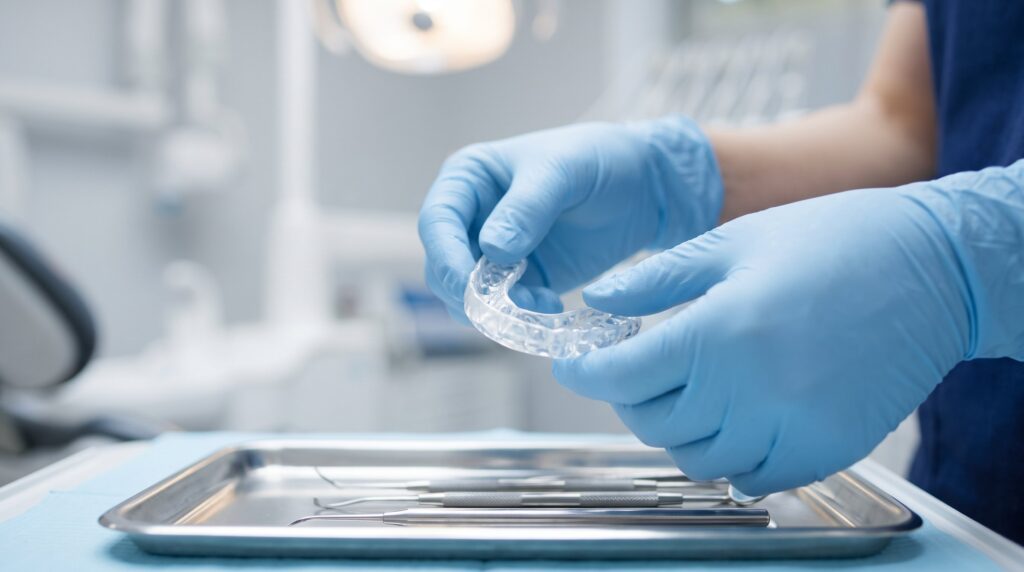
- Custom nightguards. A properly fitted oral appliance keeps the jaw in a more neutral position overnight and reduces the muscle strain from clenching. Unlike an over-the-counter option, a custom guard is molded to your bite, which means it stays in place and distributes pressure evenly rather than concentrating it on a few teeth. See whether a mouthguard could help your case.
- Jaw exercises. Gentle stretching and strengthening routines improve range of motion and reduce tension, and they work best when done consistently rather than only during a flare-up. A set of mouth and throat exercises is a good starting point for building the habit, usually paired with guidance from your provider on frequency and technique.
- Physical therapy. A therapist trained in jaw and neck function can address posture and muscle imbalances that a dental appliance alone will not fix. This is particularly useful for people whose jaw pain seems connected to desk posture, stress-related tension, or a previous neck injury.
- Anti-inflammatory medications. Over-the-counter or prescription anti-inflammatories reduce swelling and pain during flare-ups while other treatments take effect. These are typically a short-term bridge rather than a long-term solution on their own.
- Occlusal adjustments. Small corrections to how the teeth meet can relieve uneven pressure on the joint, though this is typically a later step, not a first one, since it involves a more permanent change to the bite.
- Botox injections. For cases driven mainly by muscle tension rather than joint damage, Botox can relax overactive jaw muscles and reduce clenching force. Effects usually last a few months, so it is often repeated as part of an ongoing plan rather than used once.
In practice, most treatment plans combine two or three of these approaches rather than relying on just one. A nightguard paired with a short course of jaw exercises, for example, addresses both the nighttime clenching and the daytime muscle tension that often reinforces it.
How a provider diagnoses your TMJ type before treating it
Not every jaw problem is the same, which is why treatment starts with a diagnosis rather than a generic nightguard. A thorough exam looks at whether pain comes primarily from the jaw muscles, the joint itself, or a combination of both, along with your bite alignment, jaw range of motion, and any clicking or popping sounds. Imaging helps to confirm the condition of the bony structures of the joints
What conservative care actually means
Conservative care is treatment that does not permanently alter the jaw joint or bite: nightguards, exercises, physical therapy, medication, and behavioral changes like reducing gum chewing or managing stress-related clenching. It is the default starting point because it is reversible, low-risk, and effective for the majority of patients. If you are already dealing with jaw pain day to day, a few relief techniques you can try right now can take the edge off while you get a full evaluation scheduled.
Diet also plays a supporting role during active treatment. Sticking to softer foods, cutting food into smaller pieces, and avoiding wide bites like a thick sandwich or a whole apple can meaningfully reduce strain on the joint while other treatments take effect. This is temporary, not a long-term restriction, but it can speed up how quickly symptoms settle down.
When surgery becomes necessary
Structural damage that does not respond to conservative care
Surgery is reserved for a small minority of cases, typically where imaging shows structural damage to the joint, such as significant disc displacement or degenerative changes, and months of conservative treatment have not improved symptoms. This is not a first, second, or even third step; it comes only after conservative options have genuinely been exhausted.
Even when surgery is discussed, it usually starts with the least invasive option available, such as arthrocentesis, a minor procedure to flush the joint, before moving toward more involved procedures. A provider recommending surgery should be able to clearly explain why conservative care did not work for your specific case and what the expected outcome of the procedure is.
How long non-surgical treatment takes
Timelines vary by case, but many patients notice meaningful improvement within four to eight weeks of starting a nightguard and exercise routine. More stubborn cases, or ones involving significant muscle tension, may take several months of combined treatment before symptoms fully settle. Regular follow-up visits let your provider adjust the plan as your jaw responds.
It is worth setting realistic expectations up front: TMJ disorders rarely resolves overnight, and progress often looks like fewer and milder flare-ups rather than a single dramatic turning point. Tracking your symptoms, even informally, between visits helps your provider see patterns you might not notice day to day and adjust the plan accordingly.
Building a plan around your specific triggers
Beyond the core treatments, identifying what makes your symptoms worse is often just as valuable as the treatment itself. Common triggers include chewing gum, biting nails, resting your chin on your hand, wide yawning, and clenching during focused work or stressful moments. None of these alone cause TMJ disorders, but for someone already prone to it, cutting a trigger out can meaningfully reduce how often flare-ups happen while the rest of your treatment plan does its work.
What to expect once symptoms improve
Once a treatment plan starts working, most providers recommend continuing the nightguard or exercise routine for a period even after symptoms settle, rather than stopping the moment pain fades. This helps confirm the improvement is stable and not just a temporary lull. Many patients eventually transition to wearing a nightguard only during high-stress periods or occasional flare-ups rather than every single night, though that decision should be made with your provider based on your specific case.
Occasional check-ins, even after active treatment ends, are worth keeping on the calendar. TMJ disorders can resurface years later if a new stressor, dental change, or injury shifts the balance again, and catching a return of symptoms early is always easier to manage than waiting until they become severe.
What if the first treatment doesn’t work?
It is common for a first-round treatment plan to need adjustment, and that is a normal part of the process rather than a sign anything went wrong. If a nightguard alone does not bring enough relief after a few weeks, the next step is often adding physical therapy or reassessing whether the pain is more muscle-driven or joint-driven than originally thought. This is exactly why follow-up visits are built into a treatment plan from the start.
Frequently Asked Questions
How do I diagnose TMJ myself?
You cannot fully diagnose TMJ disorders on your own, but jaw clicking, limited opening, and pain that radiates to the ear or temple are common signs worth having evaluated.
What are the most effective non-surgical treatments for TMJ?
Custom nightguards, targeted jaw exercises, physical therapy, anti-inflammatory medication, occlusal adjustments, Botox for muscle tension, and platelet-rich fibrin (PRF) injections are the most commonly used non-surgical treatments, often combined for best results.
How can I relieve TMJ pain at home?
A soft-food diet, warm compresses, gentle jaw stretches, and avoiding wide yawns or hard chewing can ease symptoms temporarily, though ongoing pain still warrants a full evaluation.
How much does TMJ surgery cost?
TMJ surgery costs vary widely by procedure, generally ranging from around $5,000 to $50,000 or more, which is one reason conservative treatment is tried first for nearly every case.