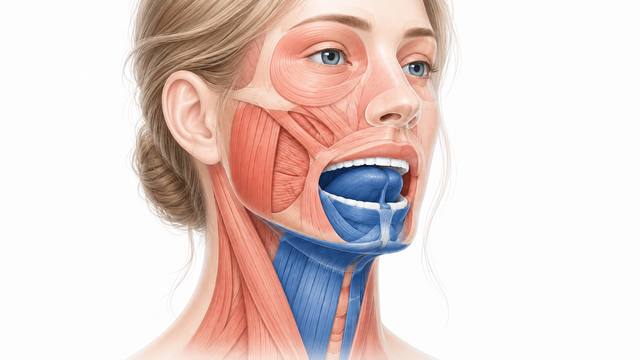
Myofunctional therapy is physical therapy for the muscles of the face, mouth, tongue and throat. At Argyle Dental Sleep and TMJ, Dr. Jaren Argyle uses it to strengthen the muscles that hold your airway open at night, making it the most natural treatment we offer for sleep-disordered breathing.
It is also used to address a range of related problems: difficulty chewing or swallowing, speech concerns, how your teeth come together, jaw and TMJ movement, and oral hygiene. Patients come to our Syracuse office for myofunctional therapy from Layton, Clinton, Clearfield, Kaysville, West Point, Roy, West Haven and South Weber.
What Is Myofunctional Therapy?
Orofacial myofunctional therapy is a structured program of targeted exercises that retrains how the muscles of your face, tongue and throat work together. It is not a device and not a procedure. It is a set of movements you practice consistently over time, the same way you would rehabilitate a shoulder.
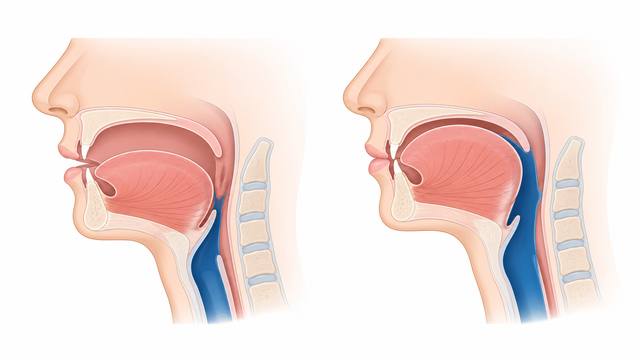
The goal is to correct the underlying muscle patterns rather than work around them: proper tongue posture against the roof of the mouth, a comfortable lip seal, nasal rather than mouth breathing, and a normal swallow. When those patterns are off, the tongue tends to sit low and back in the mouth, which crowds the airway during sleep.
What Myofunctional Therapy Can Help With
Dr. Argyle uses myofunctional therapy to treat several complications associated with the facial muscles, including problems with:
- Chewing and swallowing
- Speech
- Occlusion, or how your upper and lower teeth meet
- TMJ movement and jaw tension
- Oral hygiene
- Snoring and sleep-disordered breathing
- Mouth breathing and low tongue posture
For sleep apnea specifically, strengthening the muscles of the tongue and throat reduces the tissue collapse that obstructs breathing during sleep. When done correctly and consistently, myofunctional therapy can be an effective way to reduce the symptoms of sleep-disordered breathing.
Who Is a Good Candidate?
Myofunctional therapy tends to work best for patients with mild to moderate obstructive sleep apnea, primary snoring, or upper airway resistance syndrome, and for anyone who wants to support another treatment rather than replace it.
It is also a strong fit for children and teens. Mouth breathing, low tongue posture and tongue-tie all affect how the jaws and airway develop, and addressing them early can change the trajectory. See our page on pediatric airway health.
It asks something of you that other treatments do not: daily practice. Patients who commit to the program get results; patients who do it occasionally generally do not.
How Your Program Works
The exercises prescribed are different for each patient, custom-tailored to individual needs. Dr. Argyle begins by evaluating your tongue posture and mobility, your resting lip position, how you swallow and breathe, and how your jaw moves. From that evaluation he builds a program of specific exercises for you.
You will practice them at home, typically in short daily sessions, and return periodically so we can check your form, measure progress and advance the program. Form matters more than repetitions. An exercise done incorrectly for months does very little.
You can preview the kind of work involved on our page of mouth and throat exercises for sleep apnea, which walks through five of them, including the Tiger Yell, the Tongue Slide and soft palate stretches.
Myofunctional Therapy and Oral Appliance Therapy Together
Myofunctional therapy is often at its best alongside another treatment rather than on its own. Combined with oral appliance therapy, these exercises strengthen the muscles supporting your airway while the appliance holds it open. The device does the work at night, and the therapy improves the underlying muscle tone over time.
It also pairs naturally with TMJ treatment, since much of the same musculature is involved in jaw tension and pain.
Start Myofunctional Therapy in Syracuse
Our office is at 780 S. 2000 W., Suite E-301 in Syracuse, UT 84075, convenient to Layton, Clinton, Clearfield, West Point, Kaysville, Roy, West Haven and South Weber.
Call (801) 774-7520 or request a consultation to find out whether myofunctional therapy fits your situation.
Frequently Asked Questions
My child has sleep problems. Where do we start?
For children, myofunctional therapy is often the right first conversation. Mouth breathing, low tongue posture and restricted tongue movement all affect how the jaws and airway develop, and addressing those patterns early can change the trajectory rather than managing it later. Call our Syracuse office at (801) 774-7520 and we can talk through your child’s situation.
Does myofunctional therapy work for sleep apnea?
Myofunctional therapy can reduce the symptoms of sleep-disordered breathing by strengthening the tongue and throat muscles that collapse into the airway during sleep. It works best for mild to moderate cases and as a companion to oral appliance therapy rather than a replacement for it in more severe apnea. Results depend heavily on doing the exercises consistently.
How long does myofunctional therapy take?
Most programs run several months, with short daily practice at home and periodic visits so Dr. Argyle can check your form and advance the exercises. Some patients notice changes in breathing and jaw tension within a few weeks, but the muscle retraining that produces lasting results takes longer. Your timeline is set at your evaluation.
How much does myofunctional therapy cost?
Cost depends on the length of your program and how many visits it involves, which we determine at your evaluation. We go over the full cost with you before your program begins, so there are no surprises partway through. Financing options are available. Call our Syracuse office at (801) 774-7520 and we can talk through the specifics.
Is myofunctional therapy just tongue exercises?
Tongue exercises are part of it, but the program is broader. It addresses tongue posture and mobility, lip seal, nasal breathing, swallowing pattern and jaw movement together, because those functions are connected. The specific exercises are chosen for your evaluation findings rather than pulled from a standard list.
Can children do myofunctional therapy?
Yes, and childhood is often the ideal time. Mouth breathing, low tongue posture and restricted tongue movement all influence how the jaws and airway develop, so correcting those patterns early can improve breathing and facial growth. Dr. Argyle evaluates children as part of our pediatric airway care in Syracuse.