
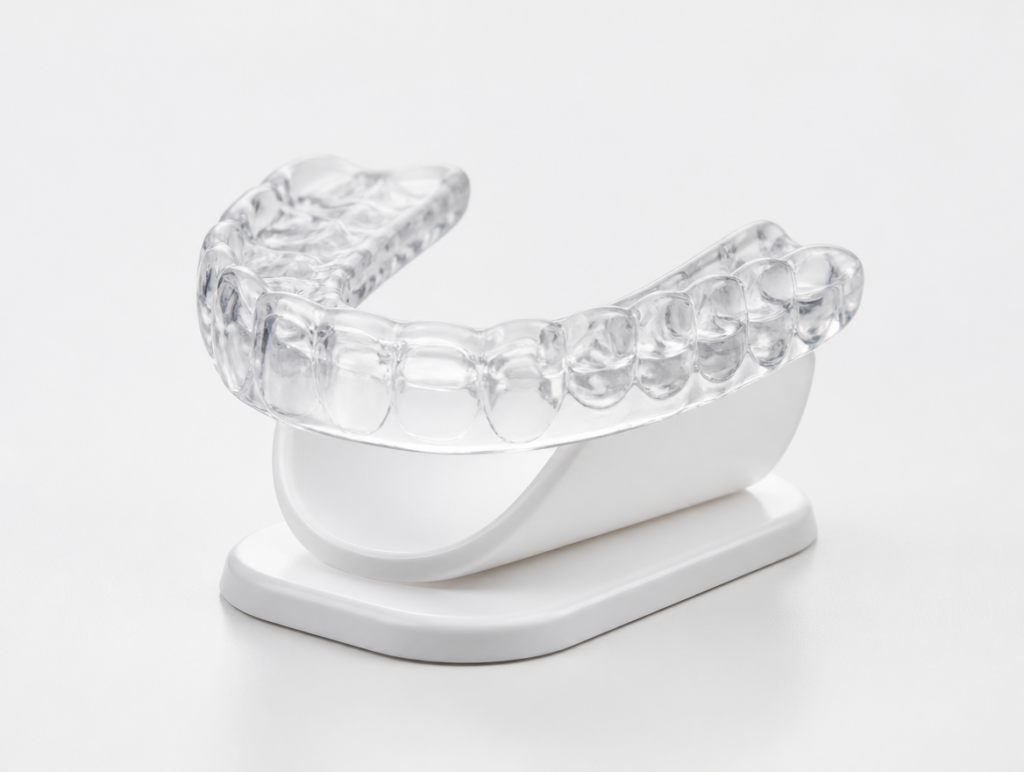
A custom oral orthotic is one of the most common and effective ways to manage TMJ disorders without surgery. Worn in the mouth, it repositions the jaw slightly and takes strain off the joint and surrounding muscles, giving irritated tissue a chance to calm down and reducing clenching-related wear on the teeth.
Dr. Argyle fits both nighttime and daytime orthotics depending on your symptoms. A nighttime appliance addresses clenching and grinding that happens during sleep, while a daytime orthotic may provide support for patients who clench during waking hours. Depending on your symptoms and treatment needs, other options may include TMJ physical therapy, Botox treatment for TMJ, or trigger point injections for TMJ disorders.
This is different from an over-the-counter mouth guard. A custom orthotic is built from an impression of your own bite and made from materials designed for extended, comfortable wear, not just protecting teeth from grinding, but actively reducing joint and muscle stress.
Most patients notice a difference in morning jaw tightness and headaches within the first few weeks of consistent wear.
TMJ Mouth Guards and Night Guards
A mouth guard for TMJ can help reduce strain on the jaw and protect the teeth from the effects of clenching or grinding. Depending on your symptoms and individual needs, a custom-fitted TMJ orthotic may be recommended to support proper jaw positioning and improve comfort. A night guard for TMJ is commonly used while sleeping to help manage nighttime teeth grinding and reduce stress on the jaw muscles and temporomandibular joints. At Argyle Dental Sleep and TMJ, treatment recommendations are based on an evaluation of your jaw function, symptoms, and individual needs.
Talk to Dr. Argyle About Orthotic Treatment in Syracuse, UT
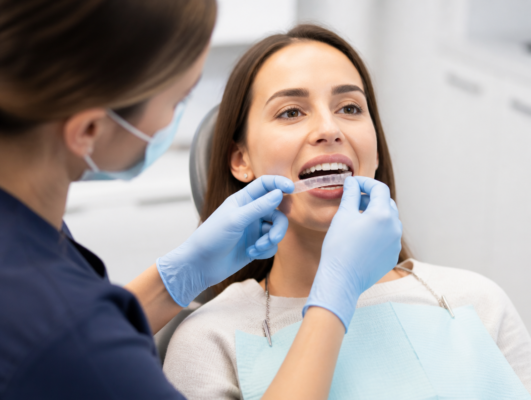
A custom-fitted orthotic starts with an evaluation of your bite, your symptoms, and what’s driving them. Our office is at 780 S. 2000 W., Suite E-301 in Syracuse, UT 84075, serving patients from North Salt Lake through Davis, Weber, Box Elder and Cache Counties, as well as southern Idaho and southwest Wyoming. Call (801) 774-7520.
Custom orthotics are one approach to managing TMJ disorders. Explore our TMJ treatment options to learn about other ways to address jaw pain, muscle tension, and joint-related symptoms.
Frequently Asked Questions
Can an oral orthotic help TMJ disorders?
Yes, a custom orthotic repositions the jaw and reduces strain on the joint and muscles, which is one of the most common conservative treatments for TMJ disorders.
Can a mouth guard help with TMJ?
A mouth guard may help some people with TMJ symptoms, particularly when teeth grinding or clenching contributes to jaw discomfort. A custom-fitted orthotic can help protect the teeth and manage pressure on the jaw. The right approach depends on the underlying cause of your symptoms.
Can I use an over-the-counter mouth guard for TMJ?
Over-the-counter mouth guards may provide some protection against teeth grinding, but they are not designed for every TMJ condition. A poorly fitting appliance may not provide the support you need. Consult a dental professional to determine whether a custom TMJ orthotic is more appropriate.
Can an ill-fitting night guard make TMJ disorders worse?
It can. A guard that isn’t properly fitted or positioned can put the jaw in an uncomfortable position and increase strain rather than relieve it, which is why a custom, dentist-fitted orthotic is different from an over-the-counter option.
How is a TMJ disorder orthotic different from a regular night guard?
A standard night guard mainly protects teeth from grinding. A TMJ disorder orthotic is custom-fitted and adjusted to a specific jaw position that reduces joint and muscle strain, something an off-the-shelf guard can’t provide.
What is the difference between a TMJ mouth guard and a night guard?
A night guard is generally designed to protect the teeth from grinding and clenching during sleep. A TMJ orthotic may be designed with additional considerations for jaw positioning and joint function. The appropriate appliance depends on your symptoms and treatment goals.