
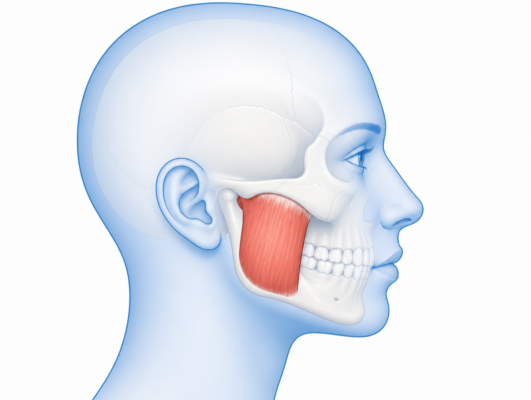
For TMJ disorders driven by chronic muscle overactivity, especially heavy clenching or grinding, botulinum toxin A (Botox) injections can reduce the muscle force behind the pain. Injected into the masseter and other chewing muscles, it temporarily relaxes the muscle fibers responsible for excessive clenching, which reduces strain on the jaw joint and eases the headaches and soreness that often come with it.
The injections themselves take just a few minutes in the office, with no downtime afterward. Most patients begin noticing reduced muscle tension within several days, with fuller effects developing over one to two weeks. The relaxing effect is temporary, typically lasting a few months, so this is usually repeated periodically as part of an ongoing management plan rather than a one-time fix.
Botox works well as a complement to other TMJ disorder treatments. Many patients pair it with custom TMJ orthotic treatment or TMJ physical therapy so the underlying clenching habit and the joint itself are both being addressed, not just the muscle tension. For patients with persistent muscle-related jaw pain, trigger point injections for TMJ disorders may also be considered as part of an individualized treatment plan.
Dr. Argyle will evaluate your muscle activity and clenching patterns during a consultation to determine whether Botox is an appropriate part of your treatment plan.

Talk to Dr. Argyle About Botox for TMJ Disorders in Syracuse, UT
Botox is one of several approaches used to manage temporomandibular joint disorders. To understand other available treatment options, explore our TMJ disorders and treatment options.
If clenching or grinding is driving your TMJ disorder pain, Botox may be a good fit alongside your other treatment. Our office is at 780 S. 2000 W., Suite E-301 in Syracuse, UT 84075, serving patients from North Salt Lake through Davis, Weber, Box Elder and Cache Counties, as well as southern Idaho and southwest Wyoming. Call (801) 774-7520.
Frequently Asked Questions
How does Botox help TMJ disorders?
Botox relaxes overactive jaw muscles, most often the masseter, which reduces the force behind clenching and grinding and eases the strain that contributes to TMJ disorder pain.
How long does Botox for TMJ disorders last?
The relaxing effect is temporary, typically lasting a few months, so most patients repeat treatment periodically as part of an ongoing plan.
Are there side effects from Botox for TMJ disorders?
Most patients only notice mild soreness at the injection sites for a day or two. Less commonly, temporary weakness in a nearby muscle can occur if the effect spreads slightly. Dr. Argyle will go over what to expect for your specific case before treatment.