
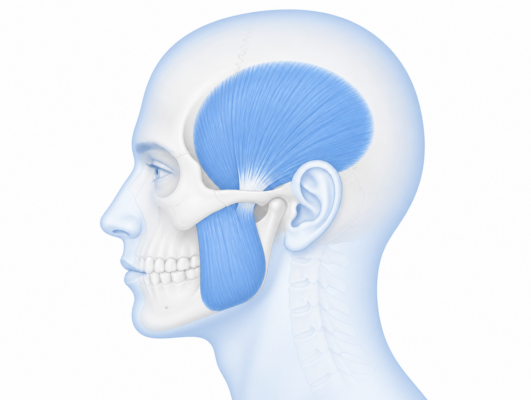
When TMJ disorder pain is driven by tight, overworked chewing muscles rather than the joint itself, trigger point injections can offer fast, targeted relief. A trigger point is a tight band of muscle fiber, often in the masseter or temporalis muscles, that stays contracted and refers pain to the jaw, temple, or ear.
During the injection, Dr. Argyle identifies the tender, taut area by feel, then injects a small amount of local anesthetic directly into the trigger point to interrupt the muscle’s pain cycle and encourage it to release. The injection itself takes only a few minutes, and most patients feel some loosening of the muscle right away, with fuller relief developing over the following day or two.
This treatment works well for muscle-related TMJ disorder pain, especially when clenching or grinding has left specific muscles chronically tight. It’s often combined with physical therapy or an orthotic so the underlying habit driving the tension is addressed alongside the immediate relief the injection provides. Relief duration varies by patient; some people need only one or two sessions, while others benefit from periodic injections as part of an ongoing management plan.
Dr. Argyle will confirm that your pain pattern matches a muscular trigger point rather than a joint problem before recommending this treatment, since the two require different approaches.

Talk to Dr. Argyle About Trigger Point Injections in Syracuse, UT
If tight, overworked jaw muscles are behind your pain, trigger point injections may offer fast, targeted relief. Our office is at 780 S. 2000 W., Suite E-301 in Syracuse, UT 84075, serving patients from North Salt Lake through Davis, Weber, Box Elder and Cache Counties, as well as southern Idaho and southwest Wyoming. Call (801) 774-7520.
Frequently Asked Questions
What are trigger point injections?
A trigger point injection places a small amount of local anesthetic directly into a tight, overworked band of muscle to interrupt the pain cycle and help the muscle release. For TMJ disorders, this typically targets the masseter or temporalis muscles.
Do trigger point injections for TMJ disorders hurt?
Most patients feel a brief pinch and pressure during the injection itself, similar to a routine dental injection. Any soreness at the injection site typically fades within a day.
How long do trigger point injections last?
Relief varies from patient to patient. Some people get lasting improvement from one or two injections, while others benefit from periodic sessions as part of an ongoing plan, especially if clenching or grinding habits continue.