
Physical therapy is one of the most effective conservative options for TMJ disorders, especially when muscle tightness, restricted movement, or poor posture are contributing to your symptoms. Rather than treating the joint in isolation, PT looks at how the jaw, neck, and shoulders work together and addresses the patterns that keep the joint under stress.
A typical plan may include manual therapy to release tight jaw and neck muscles, guided stretches and strengthening exercises for the jaw, posture correction (especially for people who spend long hours at a desk or looking down at a phone), and modalities like ultrasound or moist heat to calm inflamed tissue. Dr. Argyle coordinates care with physical therapists experienced in treating TMJ disorders, so your dental and physical therapy treatment work together rather than in separate silos.
Most patients are given a home exercise program alongside in-office sessions. Gentle jaw stretches and relaxation techniques you can do daily take just a few minutes and reinforce what happens in each PT visit. Consistency matters more than intensity here; slow, steady work on mobility and muscle tension tends to outperform occasional, aggressive stretching.
Physical therapy works well as a first-line treatment for muscle-driven TMJ disorders and as a complement to other treatments, such as an orthotic or trigger point injections, when the joint itself also needs support. Dr. Argyle will evaluate whether your symptoms are primarily muscular, joint-related, or both, and recommend physical therapy on its own or alongside other treatment.
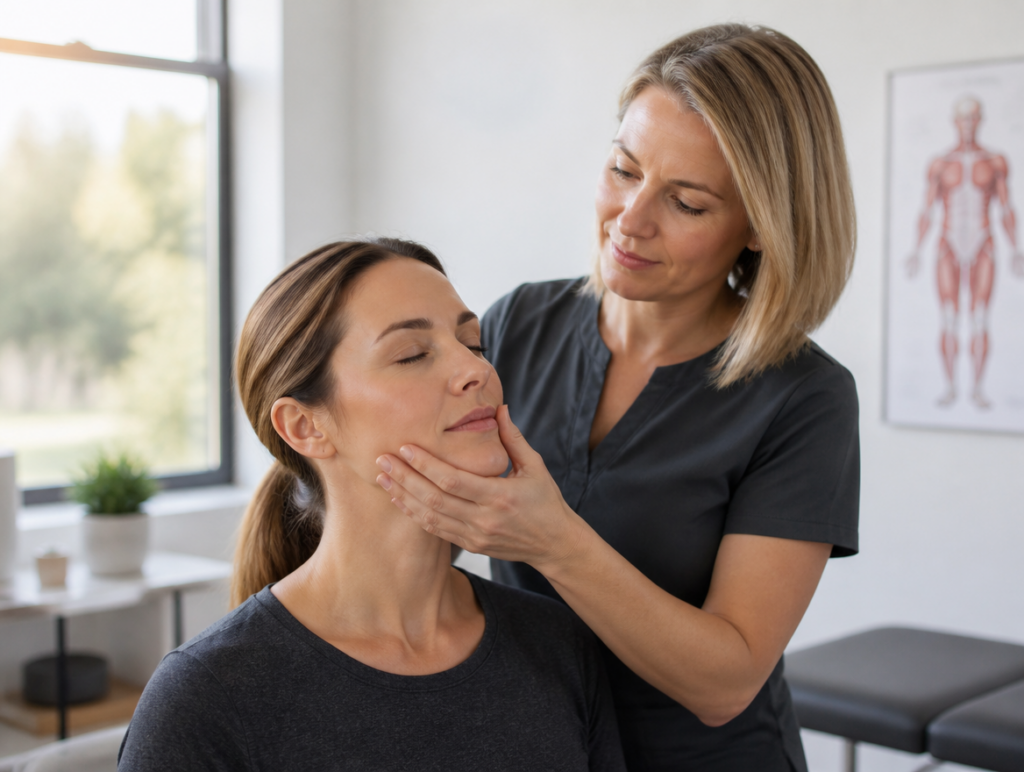

Talk to Dr. Argyle About Physical Therapy in Syracuse, UT
If muscle tightness or posture is driving your TMJ disorder symptoms, physical therapy coordinated with Dr. Argyle’s care can help. Our office is at 780 S. 2000 W., Suite E-301 in Syracuse, UT 84075, serving patients from North Salt Lake through Davis, Weber, Box Elder and Cache Counties, as well as southern Idaho and southwest Wyoming. Call (801) 774-7520.
Frequently Asked Questions
Can physical therapy help TMJ disorders?
Yes, for many patients. Physical therapy is especially effective when muscle tightness or posture is contributing to TMJ disorder symptoms, and it’s frequently used alongside other treatments when the joint itself needs additional support.
What does a physical therapy session for TMJ disorders involve?
A typical session includes manual therapy to release tight jaw and neck muscles, guided stretches, posture correction, and sometimes modalities like ultrasound or moist heat. You’ll also get exercises to do at home between visits.
How long does physical therapy for TMJ disorders take?
Timelines vary by how long symptoms have been present and how they respond to treatment. Many patients start noticing improvement within several weeks of consistent sessions and home exercises, with Dr. Argyle reassessing progress along the way.