Several surgical procedures can treat obstructive sleep apnea, and they vary enormously in how invasive they are, how long recovery takes and what they cost, from a few thousand dollars for a soft-tissue procedure to well over fifty thousand for an implanted nerve stimulator.
Dr. Argyle does not perform these surgeries. He does, however, talk through them with patients nearly every week, because most people considering surgery want to know what else is on the table first. This page lays out the most commonly used sleep apnea surgeries honestly, so you can walk into a conversation with your sleep physician or surgeon knowing what to ask.
If you would rather start with something reversible, oral appliance therapy is what we do at our Syracuse, UT office.
When Is Surgery Considered for Sleep Apnea?
Surgery is rarely the first step. It is usually considered when there is a clear anatomical obstruction that can be corrected, or when non-surgical treatments such as PAP therapy and oral appliance therapy have been tried and have not worked or cannot be tolerated.
That sequence matters, because most sleep apnea surgery is permanent. An oral appliance can be set aside; a resected tonsil cannot be replaced. It is worth being confident you have exhausted the reversible options before committing to an irreversible one.
The cost figures below are typical ranges. Actual cost depends on your surgeon, your facility, your region and your coverage, and should be confirmed directly with the surgical practice.
Maxillomandibular Osteotomy (MMO) and Advancement (MMA)
This surgery is a treatment option for patients with severe sleep apnea. Your surgeon will surgically fracture the upper and lower jaws and position them forward to enlarge the space for breathing in the entire throat. This procedure involves cutting the bone of your jaws, which then heal over the course of months. Your jaw may be wired shut for a few days and your diet will be limited for several weeks after the procedure.
Typical cost: $20,000 to $40,000.
MMA has among the highest success rates of any sleep apnea surgery, which is the trade-off for being among the most invasive. It works on the same principle as an oral appliance, moving the lower jaw forward to open the airway, but permanently and at the level of the bone.
Radiofrequency Volumetric Tissue Reduction (RVTR)
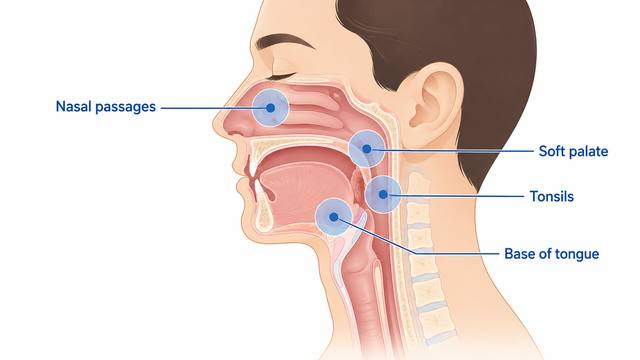
Radiofrequency ablation is a treatment option for patients with mild to moderate sleep apnea. It uses controlled cauterization to shrink and tighten the tissues in and around the throat, and can be applied to the soft palate, tonsils and tongue. The tissues will generally replace themselves over time, requiring repeated treatments.
Typical cost: $3,500 to $4,500 per course.
Septoplasty and Turbinate Reduction
These surgical options open your nasal passages to improve airflow. Septoplasty straightens a bent or deviated nasal septum, the divider that separates the two sides of the nose. Turbinate reduction reduces or removes the curved structures that stick out from the side of the nose, which can become enlarged for a number of reasons, including allergies. Certain medications can also help reduce the size of turbinates.
Typical cost: $3,500 to $5,500.
Worth knowing: nasal surgery on its own often does not resolve obstructive sleep apnea, since the obstruction is usually further back in the throat. It can, however, make PAP therapy or an oral appliance considerably easier to tolerate.
Tonsillectomy and Adenoidectomy
A tonsillectomy is a surgical procedure performed to remove the tonsils, the small, round glands in the back of your mouth, on the sides of your throat. Adenoids are similar to the tonsils but are located above the soft roof of the mouth, and are often removed at the same time in a procedure known as an adenoidectomy. Both can become enlarged due to recurrent infections as well as mouth breathing.
Typical cost: $3,500 to $4,500.
This is the most common sleep apnea surgery in children, where enlarged tonsils and adenoids are frequently the direct cause of obstruction. See our page on pediatric airway health.
Hypoglossal Nerve Stimulation
Hypoglossal nerve stimulation (HGNS) is a relatively new treatment, also known as upper airway stimulation or a “pacemaker for the tongue.” It works by stimulating the hypoglossal nerve to restore tone to the key tongue muscles that, when relaxed, can block the airway and reduce or stop breathing during sleep.
Typical cost: $40,000 to $60,000.
The stimulating device and battery, along with a breathing sensor, are implanted in the chest and connected to a stimulation lead that touches the hypoglossal nerve. You turn it on with a handheld remote when you go to sleep and off when you wake.
HGNS has specific eligibility criteria, including apnea severity, body mass index and the pattern of airway collapse, which your sleep physician evaluates before you can be considered a candidate.
One practical note we hear often: many insurers require patients to try oral appliance therapy first, and document that it did not work, before they will cover an Inspire implant. If that is the position you are in, oral appliance therapy is a step you will likely need to take anyway, and for some patients it works well enough that the surgery becomes unnecessary.
Comparing Your Options
| Procedure | Invasiveness | Recovery | Typical cost |
|---|---|---|---|
| Radiofrequency volumetric tissue reduction | Outpatient, least invasive. Often repeated over time. | Short. Sore throat for several days. | $3,500 to $4,500 |
| Septoplasty and turbinate reduction | Outpatient. Addresses nasal airflow only. | About one to two weeks of congestion. | $3,500 to $5,500 |
| Tonsillectomy and adenoidectomy | Outpatient. Most effective in children. | One to two weeks, and often painful in adults. | $3,500 to $4,500 |
| Hypoglossal nerve stimulation | Implanted device. Strict eligibility criteria. | Several weeks before the device is activated. | $40,000 to $60,000 |
| Maxillomandibular advancement | Skeletal surgery. Most invasive of the five. | Months of bone healing. Restricted diet for weeks. | $20,000 to $40,000 |
All five are permanent decisions with real recovery time. Oral appliance therapy sits outside this list entirely: it is reversible, has no recovery period, and can be discontinued at any time. For patients with mild to moderate obstructive sleep apnea, and for many with severe apnea who cannot tolerate CPAP, it is worth trying before surgery, not after.
Talk Through Your Options in Syracuse, UT
If you are weighing sleep apnea surgery, it is worth an appointment first to find out whether a custom oral appliance could get you where you need to be without one. Dr. Argyle works closely with sleep physicians throughout Davis and Weber Counties and will tell you straight if surgery is the better path for your case.
Our office is at 780 S. 2000 W., Suite E-301 in Syracuse, UT 84075, serving Layton, Clinton, Clearfield, West Point, Kaysville, Roy, West Haven and South Weber. Call (801) 774-7520 or request a consultation.
Frequently Asked Questions
How much does sleep apnea surgery cost?
It varies widely by procedure. Radiofrequency tissue reduction and tonsillectomy typically run $3,500 to $4,500, septoplasty with turbinate reduction $3,500 to $5,500, maxillomandibular advancement $20,000 to $40,000, and hypoglossal nerve stimulation $40,000 to $60,000. Confirm your actual cost with the surgical practice.
What is the success rate of sleep apnea surgery?
It depends heavily on the procedure and on where your airway actually collapses. Maxillomandibular advancement has among the highest success rates because it enlarges the entire throat, while soft-tissue procedures are less predictable and nasal surgery alone often does not resolve apnea. Ask your surgeon what results they see for your specific anatomy.
Is sleep apnea surgery worth it?
It depends on your anatomy, the severity of your apnea, and what you have already tried. Surgery can be the right answer when there is a correctable obstruction or when other treatments have genuinely failed. Because most of these procedures are permanent, it is worth confirming that reversible options like oral appliance therapy will not work for you first.
Do I have to try an oral appliance before insurance will cover Inspire?
Many insurers do require documented failure of oral appliance therapy before approving a hypoglossal nerve stimulator, though requirements vary by plan. If that applies to you, it is a step you will need to take regardless, and Dr. Argyle can fit the appliance and document the outcome with before and after oximetry testing. Call (801) 774-7520.
Does Dr. Argyle perform sleep apnea surgery?
No. Dr. Argyle treats obstructive sleep apnea with custom oral appliance therapy and myofunctional therapy at our Syracuse office, and works alongside local sleep physicians and surgeons. If surgery turns out to be the right path for you, he will say so and coordinate with the physicians managing your care.
Can I try an oral appliance before considering surgery?
Yes, and for many patients that is the sensible order. Oral appliance therapy is non-invasive and fully reversible, with no recovery period, so trying it costs you far less than a surgical decision you cannot undo. Dr. Argyle verifies results with overnight oximetry testing so you know objectively whether it worked.
How long is recovery from sleep apnea surgery?
It ranges from days to months. Outpatient soft-tissue procedures like radiofrequency reduction generally involve a short recovery, while tonsillectomy in adults often means one to two weeks of significant throat pain. Maxillomandibular advancement is the longest, with bone healing over months and a restricted diet for several weeks.