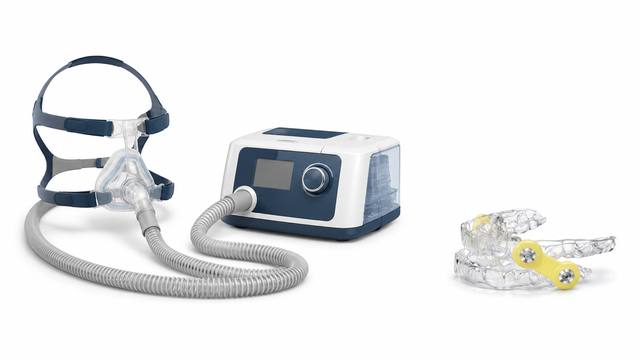
Positive airway pressure therapy is the current gold standard for treating obstructive sleep apnea, and it is offered as an initial treatment to the majority of patients. A PAP device pumps pressurized air through a hose and into your airway, and that stable, steady flow prevents the airway from collapsing so you can breathe without fragmenting your sleep.
We do not sell CPAP machines at Argyle Dental Sleep and TMJ: that comes through your sleep physician and a durable medical equipment supplier. What we can do is explain how PAP therapy works so you know what to expect, and be here if it turns out you cannot tolerate it. A substantial share of patients who start on CPAP stop using it, and for many of them a custom oral appliance is the treatment that finally sticks.
How PAP Therapy Works
A core component of treatment for obstructive sleep apnea is the use of a positive airway pressure device. PAP machines work by pumping pressurized air through a hose and into the airway. The stable, steady flow of air prevents airway collapse and promotes regular breathing without sleep fragmentation.
A prescription is required to obtain and use PAP therapy, and the pressure settings come pre-set with measurements taken by your healthcare team. Setting the device up properly helps you get used to sleeping with it so you can get the most benefit from it. To take in the pressurized air and keep the airway open, you need to wear a mask attached to the device every time you sleep.
CPAP vs. APAP vs. BiPAP
The three most common types differ in how they deliver pressure:
CPAP: continuous positive airway pressure. Delivers air at one consistent pressure level all night. It is the most common form of PAP therapy and the one most patients start with.
APAP: automatic positive airway pressure. Adjusts pressure automatically within a prescribed range as your needs change through the night. Some patients find it more comfortable than a single fixed pressure, particularly if their apnea varies by sleep position or sleep stage.
BiPAP: bilevel positive airway pressure. Uses two pressures: a higher one when you inhale and a lower one when you exhale. That lower exhale pressure makes breathing out easier, which is why BiPAP is often prescribed for patients who struggle to exhale against CPAP pressure, need higher pressures overall, or have certain heart or lung conditions alongside their apnea.
Which one you get is a clinical decision made by your sleep physician based on your sleep study and your response to treatment, not something to switch on your own.
| Type | How pressure is delivered | Often prescribed for |
|---|---|---|
| CPAP | One fixed pressure, held constant all night. | Most patients starting PAP therapy for the first time. |
| APAP | Adjusts automatically within a prescribed range as your needs change. | Apnea that varies by sleep position or sleep stage. |
| BiPAP | Two pressures: higher on inhale, lower on exhale. | Trouble exhaling against pressure, higher pressure needs, or certain heart and lung conditions. |
Choosing a CPAP Mask
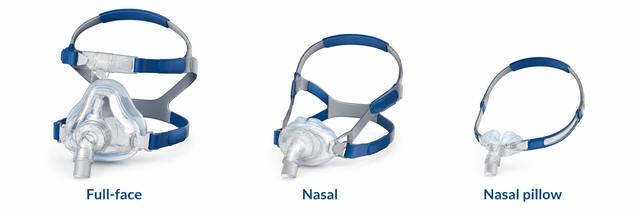
A full-face mask covers both the nose and mouth, while other masks cover or go underneath the nose. The choice depends on several factors: whether you breathe through your mouth, your sleeping position, and whether you deal with nasal congestion.
Full-face masks cover the nose and mouth, and suit mouth breathers and anyone needing higher pressures.
Nasal masks cover the nose only. They are smaller and less obtrusive, and work well if you breathe through your nose reliably.
Nasal pillow masks seal at the nostrils and are the least obtrusive of the three. They suit side sleepers and anyone who feels claustrophobic in a larger mask, though they can be uncomfortable at higher pressures.
Mask fit is the single most common reason PAP therapy fails. If your mask leaks, digs in, or comes loose when you turn over, it is worth going back to your supplier for a refit before you conclude the therapy itself is not working.
When CPAP Is Not Working
PAP therapy is highly effective when it is used, but a large proportion of patients do not keep using it. The common reasons are consistent and worth naming: mask discomfort and skin irritation, difficulty exhaling against the pressure, dry mouth or nasal passages, noise, claustrophobia, trouble sleeping on your side, and the practical hassle of travel.
Some of these are fixable. A different mask style, a heated humidifier, a ramp setting or a pressure adjustment through your sleep physician can resolve a lot of complaints. Treating nasal obstruction can help too, since surgical options like septoplasty often make PAP therapy easier to tolerate even when they do not resolve apnea on their own.
But if you have worked through those adjustments and still cannot use the machine, the worst outcome is an untreated airway and a device in the closet. Untreated obstructive sleep apnea carries real cardiovascular and cognitive consequences, so the goal is treatment you will actually use every night.
Your Alternative: Oral Appliance Therapy
For patients with mild to moderate obstructive sleep apnea, and for patients with severe apnea who cannot tolerate CPAP, oral appliance therapy is a recognized alternative. A small, custom-fitted device holds your lower jaw slightly forward to keep the airway open. There is no mask, no hose, no motor and no power supply. It fits in a pocket.
Dr. Argyle is a Diplomate of the American Board of Dental Sleep Medicine and works closely with sleep physicians throughout northern Utah, including Dr. Gary J. Alexander, Dr. Suleman Iqbal and Dr. Richard Hammond. He will verify your results with overnight oximetry testing before and after treatment, and keep your physician updated throughout, so switching treatments does not mean leaving your medical team behind.
Myofunctional therapy can be used alongside either approach to strengthen the muscles supporting your airway.
Talk to Us in Syracuse, UT
If CPAP is not working for you, do not simply stop treating your sleep apnea. Come talk to us about whether an oral appliance would.
Our office is at 780 S. 2000 W., Suite E-301 in Syracuse, UT 84075, serving Layton, Clinton, Clearfield, West Point, Kaysville, Roy, West Haven and South Weber. Call (801) 774-7520 or request a consultation.
Frequently Asked Questions
How is what you do different from the CPAP I am wearing?
A CPAP machine pushes pressurized air through a mask to hold your airway open. An oral appliance does the same job mechanically, by holding your lower jaw slightly forward so the airway stays open on its own. No mask, no hose, no motor and no power supply. It is a different route to the same outcome, and for many patients it is the one they can actually stick with.
I cannot tolerate my CPAP. Are there other treatment options?
Yes. Start by working with your supplier and sleep physician on mask fit, humidification and pressure settings, since those fix many complaints. If you have tried that and still cannot use the machine, oral appliance therapy is a recognized alternative for mild to moderate sleep apnea and for severe apnea when CPAP is not tolerated. Call us at (801) 774-7520.
Is oral appliance therapy something a dentist does?
Yes, and it requires specific training. Dr. Argyle is a Diplomate of the American Board of Dental Sleep Medicine and treats obstructive sleep apnea with custom oral appliances at our Syracuse office. Your diagnosis still comes from a sleep physician, and Dr. Argyle coordinates with them throughout your treatment.
My sleep physician referred me for oral appliance therapy. What happens next?
Call our Syracuse office at (801) 774-7520 and we will start with a phone conversation and a telemedicine visit with Dr. Argyle to review your sleep study. From there it is an at-home oximetry baseline, an exam with a CBCT scan, records for your custom appliance, and delivery. Dr. Argyle keeps your referring physician updated throughout.
What is the difference between CPAP and BiPAP?
CPAP delivers air at one continuous pressure all night. BiPAP uses two pressures, higher when you inhale and lower when you exhale, which makes breathing out easier. BiPAP is often prescribed for patients who struggle against CPAP pressure, need higher pressures, or have certain heart or lung conditions. Your sleep physician decides which is appropriate.
What are the side effects of CPAP?
The common ones are mask discomfort and skin irritation, dry mouth or nasal passages, nasal congestion, air swallowing and bloating, and difficulty exhaling against the pressure. Many are fixable with a different mask style, a heated humidifier, or a pressure adjustment from your sleep physician. Do not adjust pressure settings yourself.